5 Signs Your Solar Panels Need Immediate Cleaning
Introduction
Your solar panels are producing less electricity than usual. Your monthly power bills are climbing despite having a solar system. These problems often stem from dirty solar panels.
Dust, bird droppings, and debris block sunlight from reaching your panels. In South Africa’s climate, panels can lose 20-30% of their efficiency without regular cleaning. This costs you money and reduces your energy independence during load shedding.
This guide reveals five clear warning signs that your solar panels need immediate cleaning. You’ll learn how to spot these issues, why they happen in South African conditions, and what to do about them.
Clean solar panels produce maximum electricity and save you money. Recognizing these signs early prevents bigger problems and protects your solar investment.
Why Solar Panel Cleaning Matters in South Africa
The Impact of South African Weather
South Africa’s climate creates unique challenges for solar panel maintenance. Dust storms, seasonal droughts, and high UV exposure affect panel performance across the country.
Dust Accumulation Issues:
- Johannesburg’s mining dust settles on panels quickly
- Cape Town’s coastal salt spray leaves residue
- Durban’s humidity combines with dust to create sticky films
- Pretoria’s dry conditions increase static electricity buildup
Seasonal Cleaning Challenges: Winter brings less rain to naturally clean panels. Summer dust storms can cover panels completely in just days. Bird activity increases during breeding seasons, creating more droppings.
Economic Impact of Dirty Panels
Dirty solar panels directly affect your electricity savings. A 20% reduction in panel efficiency means 20% less free solar power and higher monthly bills.
Real Cost Examples:
- A 5kW system losing 25% efficiency costs R300-500 extra per month
- Commercial installations can lose R2,000-5,000 monthly from dirty panels
- Backup battery systems work harder when panels underperform
Sign #1: Significant Drop in Power Generation
How to Monitor Your System Performance
Your inverter display shows daily power generation numbers. Most systems also include monitoring apps that track performance over time.
Normal Power Generation Patterns:
- Morning power starts around 7 AM
- Peak generation occurs between 11 AM and 2 PM
- Evening production drops after 5 PM
- Seasonal variations affect total daily output
Warning Signs of Reduced Performance:
- Daily generation drops by 15% or more without weather changes
- Peak power output decreases significantly
- Power generation stays low on clear, sunny days
- Monthly totals decline compared to previous months
Comparing Against Historical Data
Check your system’s performance against the same period last year. Account for seasonal differences and weather patterns.
Performance Comparison Steps:
- Review monthly generation reports
- Compare similar weather conditions
- Note any consistent decline patterns
- Check if the drop coincides with dust storms or bird activity
When Weather Isn’t the Problem
If your power generation drops during clear weather, dirty panels are likely the cause. Cloud cover, rain, and seasonal sun angles naturally affect output.
Non-Weather Related Causes:
- Dust accumulation from construction nearby
- Bird droppings covering multiple panels
- Pollen deposits during flowering seasons
- Salt spray buildup in coastal areas
Sign #2: Visible Dirt and Debris Buildup
What to Look For
You can often see dirt accumulation on solar panels from the ground. Use binoculars to inspect panels safely without climbing on your roof.
Common Types of Debris:
- Fine dust layers that dull panel surfaces
- Bird droppings concentrated in specific areas
- Leaves and twigs stuck to panel edges
- Pollen deposits creating yellow or orange films
Dust Accumulation Patterns
Dust settles differently depending on your location and weather patterns. Understanding these patterns helps you plan cleaning schedules.
Johannesburg Dust Patterns:
- Mining dust creates fine, persistent layers
- Highveld winds spread dust across wide areas
- Dry winters increase dust accumulation
- Construction activity nearby worsens buildup
Cape Town Coastal Effects:
- Salt spray combines with dust to create sticky residues
- Ocean winds carry particles inland
- Mountain dust from Table Mountain affects southern suburbs
- Seasonal berg winds increase dust transport
Durban Humidity Impact:
- High humidity makes dust stick to panels
- Coastal salt accelerates corrosion around panel frames
- Tropical storms can splash mud onto panels
- Sugar cane burning seasons increase particulate matter
Regional Debris Challenges
Different regions face specific debris problems that affect solar panels.
Pretoria Suburban Issues:
- Jacaranda trees drop flowers and leaves
- Grass pollen creates seasonal coating
- Dust storms from surrounding areas
- Bird activity near water features
Rural Installation Challenges:
- Agricultural dust from farming activities
- Higher bird populations create more droppings
- Pollen from wildflowers and crops
- Dust from unpaved roads
Sign #3: Streaks and Water Stains After Rain
Why Rain Doesn’t Always Clean Panels
Many homeowners expect rain to clean their solar panels naturally. However, South African rain patterns often make the problem worse.
Why Rain Fails to Clean Panels:
- Light drizzle moves dirt around without washing it away
- Dust mixes with water to create muddy streaks
- Mineral deposits in rainwater leave white stains
- Panels dry with dirt redistributed across the surface
Identifying Water Stains
Water stains appear as white or cloudy marks on panel surfaces. These mineral deposits build up over time and reduce light transmission.
Common Stain Patterns:
- White streaks following water flow paths
- Cloudy patches where water pools
- Ring-shaped marks where water droplets evaporated
- Mineral buildup along panel edges
Hard Water Problems
South Africa’s hard water contains high mineral content. When rain or cleaning water evaporates, these minerals remain on panel surfaces.
Mineral Deposit Issues:
- Calcium and magnesium leave white residues
- Iron deposits create rust-colored stains
- Salt deposits from coastal areas
- Alkaline deposits from certain water sources
The Mud Factor
Rain often creates mud on solar panels, especially during dust storms. This mud dries into hard layers that block significant sunlight.
Mud Formation Process:
- Dust accumulates on panels
- Light rain wets the dust
- Mud forms as water mixes with particles
- Sun bakes the mud into hard layers
- Efficiency drops dramatically
Sign #4: Uneven Shading or Dark Spots
Hot Spots and Efficiency Loss
Dark spots on solar panels indicate serious problems. These areas absorb more heat and can damage panel cells permanently.
Hot Spot Causes:
- Bird droppings covering individual cells
- Leaf debris blocking light transmission
- Dust buildup in panel corners
- Manufacturing defects worsened by dirt
Thermal Imaging Detection
Professional inspections use thermal cameras to identify hot spots. These cameras show temperature differences across panel surfaces.
Temperature Variation Signs:
- Cells running 10-15°C hotter than surrounding areas
- Consistent hot spots in the same panel locations
- Temperature differences between clean and dirty panel sections
- Overheating inverters due to uneven panel performance
Shading Pattern Analysis
Uneven dirt distribution creates partial shading effects. Some panel areas produce electricity while others remain blocked.
Shading Impact on Performance:
- One dirty cell can reduce an entire panel’s output
- String inverters amplify the effect across multiple panels
- Power optimizers minimize shading losses
- Microinverters isolate problems to individual panels
Bird-Related Damage
Birds create concentrated waste deposits that cause significant shading. These deposits are acidic and can damage panel surfaces permanently.
Bird Damage Patterns:
- Concentrated droppings under perching spots
- Acidic waste etching panel surfaces
- Nesting materials blocking airflow
- Scratches from bird claws on panel frames
Sign #5: Increased Electricity Bills Despite Solar Power
Monitoring Your Electricity Costs
Your monthly electricity bill should decrease significantly with solar panels. Rising bills indicate your system isn’t performing optimally.
Bill Analysis Steps:
- Compare current bills to pre-solar installation costs
- Review monthly usage patterns
- Check peak demand charges
- Analyze time-of-use billing impacts
Load Shedding Impact
Dirty panels reduce backup power during load shedding. This forces you to rely more on expensive grid electricity or generator power.
Load Shedding Costs:
- Generator fuel costs increase
- Battery systems discharge faster
- Essential appliances run on grid power
- Business productivity losses during outages
Peak Demand Charges
Many electricity tariffs include peak demand charges. Dirty panels can’t meet peak power needs, forcing you to draw expensive grid power.
Peak Demand Issues:
- Morning geyser heating requires maximum power
- Air conditioning loads during hot afternoons
- Industrial equipment startup demands
- Electric vehicle charging requirements
Time-of-Use Tariff Effects
Solar panels should produce maximum power during expensive peak tariff periods. Dirty panels reduce this benefit significantly.
Tariff Optimization Benefits:
- Peak period power generation saves most money
- Reduced grid dependence during expensive hours
- Better battery charging during optimal sun hours
- Lower overall electricity costs year-round
Professional Cleaning vs DIY Cleaning
Safety Considerations
Cleaning solar panels involves working at height and around electrical equipment. Safety must be your top priority.
Safety Risks:
- Falls from roofs or ladders
- Electrical shock from wet conditions
- Damage to panels from improper cleaning
- Injury from broken glass or sharp edges
Professional Cleaning Advantages
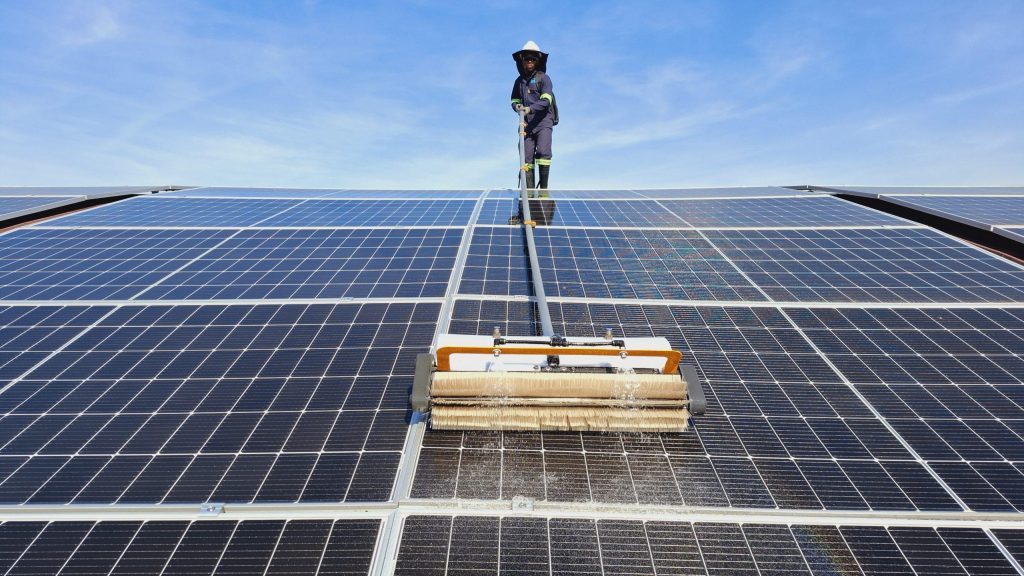
Professional solar panel cleaning services have specialized equipment and insurance coverage. They complete the job safely and effectively.
Professional Service Benefits:
- Proper safety equipment and training
- Specialized cleaning solutions and tools
- Insurance coverage for damage or accidents
- Warranty protection for your panels
- Efficient cleaning of large installations
When to Choose Professional Cleaning
Consider professional cleaning for:
- Rooftop installations higher than single-story
- Commercial or industrial solar systems
- Panels with visible damage or defects
- Systems under warranty requiring certified maintenance
- Locations with difficult access or safety concerns
DIY Cleaning Guidelines
If you choose to clean panels yourself, follow these safety guidelines:
Essential Safety Equipment:
- Stable ladder with someone spotting you
- Non-slip shoes with good grip
- Safety harness for steep roofs
- Electrical isolation switches turned off
Proper Cleaning Technique:
- Clean panels early morning or late afternoon
- Use soft brushes and squeegees only
- Rinse with clean water thoroughly
- Avoid harsh chemicals or abrasive materials
- Never walk on panels or apply pressure
Cleaning Frequency Guidelines
Regional Cleaning Schedules
Different areas of South Africa require different cleaning frequencies based on local conditions.
Johannesburg Cleaning Schedule:
- Monthly cleaning during dry winter months
- Bi-weekly cleaning during dust storm seasons
- Immediate cleaning after major dust events
- Quarterly professional deep cleaning
Cape Town Coastal Areas:
- Monthly cleaning to remove salt spray
- Immediate cleaning after strong berg winds
- Seasonal cleaning before summer peak demand
- Annual professional inspection and cleaning
Durban Humidity Considerations:
- Bi-weekly cleaning during humid summer months
- Monthly cleaning during dry winter periods
- Immediate cleaning after tropical storms
- Professional cleaning before cyclone season
Pretoria Suburban Schedule:
- Monthly cleaning during jacaranda season
- Bi-weekly cleaning during spring pollen season
- Immediate cleaning after dust storms
- Quarterly professional maintenance
Seasonal Maintenance Calendar
Plan your cleaning schedule around South African seasons and weather patterns.
Spring (September-November):
- Heavy cleaning after winter dust accumulation
- Remove pollen and flowering debris
- Check for winter damage or wear
- Prepare for summer peak generation
Summer (December-February):
- Monthly cleaning during peak generation season
- Monitor for heat-related efficiency loss
- Clean after thunderstorms and hail
- Maximize generation during expensive peak tariffs
Autumn (March-May):
- Clean fallen leaves and debris
- Prepare for winter dust accumulation
- Check drainage and water flow
- Professional inspection before winter
Winter (June-August):
- Increase cleaning frequency due to less rain
- Monitor for dust storm damage
- Clean before load shedding increases
- Plan major maintenance for spring
Choosing the Right Cleaning Service
Qualifications to Look For
Professional solar panel cleaning services should have proper training and insurance coverage.
Essential Qualifications:
- Public liability insurance
- Working at height certification
- Solar industry experience
- Proper safety equipment
- Local business registration
Questions to Ask Cleaning Companies
Important Questions:
- Do you have insurance coverage?
- What cleaning methods do you use?
- How often do you recommend cleaning?
- Do you provide written quotes?
- Are your technicians trained in solar panel maintenance?
Service Comparison Factors
Cost Considerations:
- Per-panel pricing vs flat rate pricing
- Frequency discounts for regular service
- Travel costs for rural installations
- Additional services included
- Warranty coverage provided
Service Quality Indicators:
- Before and after photos
- Performance monitoring reports
- Customer references and reviews
- Professional equipment and vehicles
- Clear communication and scheduling
Cost-Benefit Analysis of Regular Cleaning
Cleaning Costs vs Energy Savings
Regular cleaning pays for itself through increased power generation and reduced electricity bills.
Typical Cleaning Costs:
- DIY cleaning: R50-100 per session
- Professional residential cleaning: R300-800 per visit
- Commercial cleaning: R10-20 per panel
- Annual maintenance contracts: R1,500-5,000
Energy Production Benefits:
- 20-30% increase in power generation
- R200-500 monthly savings on electricity bills
- Reduced generator fuel costs during load shedding
- Extended battery life from optimal charging
Long-Term Investment Protection
Clean panels last longer and maintain warranty coverage. Neglected panels suffer permanent damage and void warranties.
Investment Protection Benefits:
- Maintained manufacturer warranty coverage
- Prevented permanent panel damage
- Extended system lifespan
- Higher resale value for solar installations
Return on Investment Calculation
Calculate your cleaning investment return:
ROI Formula:
- Monthly electricity savings from clean panels
- Subtract monthly cleaning costs
- Add avoided generator fuel costs
- Include extended equipment lifespan value
- Calculate annual percentage return
Maintenance Beyond Cleaning
Comprehensive System Maintenance
Solar panel cleaning is part of overall system maintenance. Regular inspections identify problems before they become expensive repairs.
Additional Maintenance Tasks:
- Inverter performance monitoring
- Electrical connection inspection
- Mounting system security checks
- Battery maintenance (for hybrid systems)
- Vegetation management around panels
Preventive Maintenance Benefits
Regular maintenance prevents small problems from becoming major repairs. This saves money and ensures consistent power generation.
Preventive Maintenance Schedule:
- Monthly: Visual inspection and cleaning
- Quarterly: Electrical connection checks
- Annually: Professional system inspection
- As needed: Storm damage assessment
Professional Maintenance Services
Smart Energy O&M provides comprehensive solar system maintenance beyond just cleaning. Our services include performance monitoring, electrical inspections, and preventive maintenance.
Service Advantages:
- Qualified electrical technicians
- Comprehensive system diagnostics
- Warranty-compliant maintenance
- Emergency repair services
- Performance optimization recommendations
Conclusion
Clean solar panels are essential for maximum energy production and cost savings. The five warning signs – reduced power generation, visible dirt buildup, water stains, uneven shading, and increased electricity bills – indicate immediate cleaning needs.
South Africa’s climate creates unique challenges for solar panel maintenance. Dust storms, bird activity, and mineral deposits require regular attention to maintain optimal performance.
Professional cleaning services offer safety, efficiency, and warranty protection. DIY cleaning is possible but requires proper safety equipment and techniques.
Regular cleaning schedules based on local conditions prevent problems and protect your solar investment. Monthly cleaning during dusty seasons and quarterly professional maintenance ensure optimal performance.
The cost of regular cleaning pays for itself through increased power generation and reduced electricity bills. Clean panels produce 20-30% more electricity and last longer than neglected systems.
Smart Energy O&M provides professional solar panel cleaning and maintenance services across South Africa. Our experienced technicians ensure your panels perform optimally and maintain warranty coverage.
Don’t let dirty panels reduce your solar savings. Contact Smart Energy O&M today to schedule professional cleaning and maximize your solar investment’s performance during South Africa’s ongoing energy challenges.